
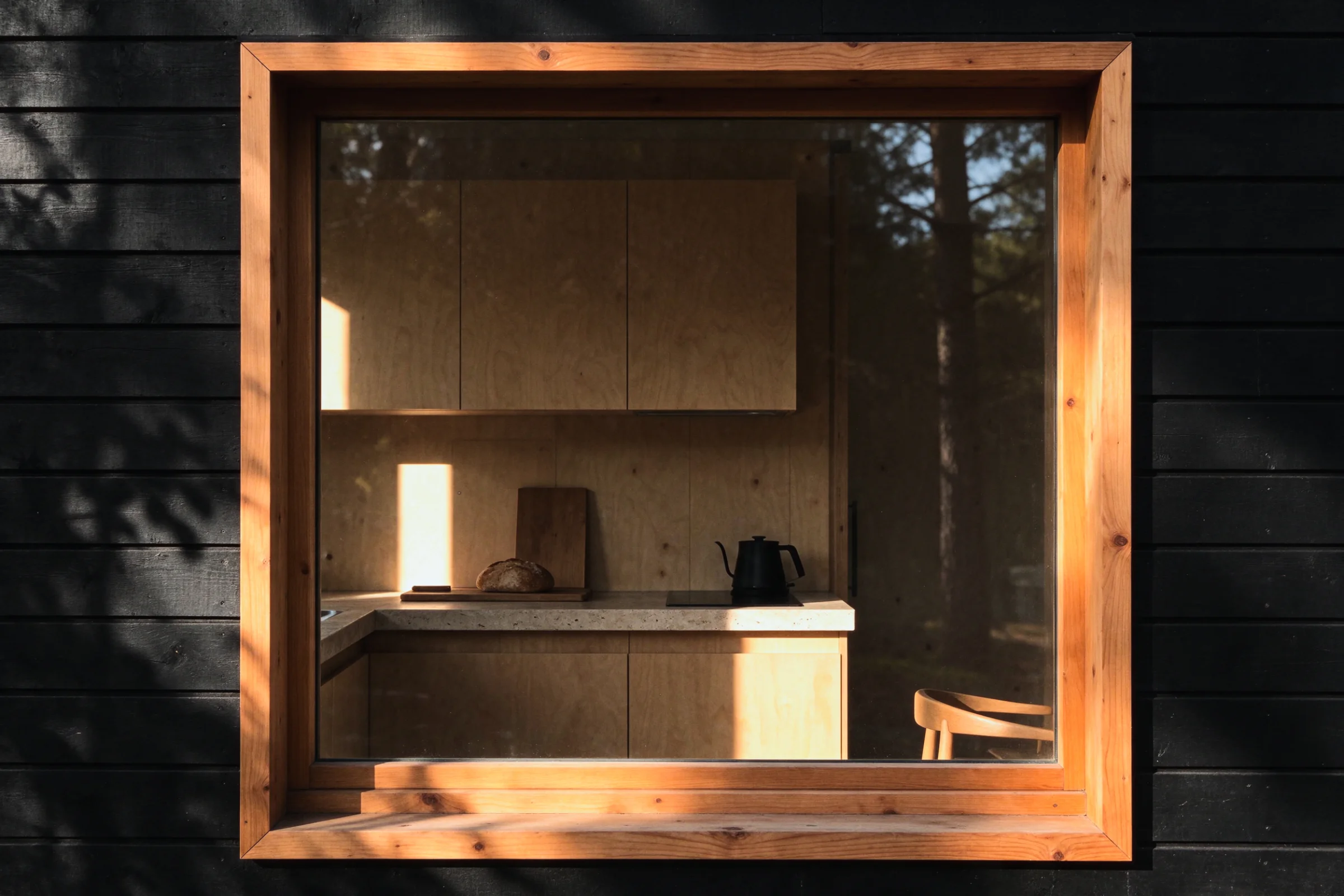
Triple-pane glazing
Three layers of architectural glass separated by sealed, gas-filled gaps and set inside high-strength fiberglass frames. In most buildings, windows are the weakest link in the wall, leaking warmth in winter, letting in harsh heat in summer, and transmitting outside noise. At Bhu, the glazing is engineered as an active thermal and acoustic shield that brings the forest right up to your chair while keeping the elements completely outside.
Temperature
In standard double-pane windows, freezing outdoor temperatures chill the glass, pulling radiant warmth straight out of your body whenever you sit nearby and causing your muscles to subtly tense against the cold. On a −20°C Northern night, Bhu’s triple-pane glass and dense gas pockets keep the interior pane close to room temperature. You can read, rest, or sleep right beside the window without feeling a chill radiating off the glass, and without waking up to pooled condensation on the sills.
Sound
Outside noise forces the nervous system to stay slightly on guard, even during sleep. Here, every pane of glass and every gas-filled chamber interrupts and absorbs sound waves in turn, while tight compression seals block wind whistle around the frame. Gusting winter storms, distant traffic, and rustling branches drop to a soft murmur the moment the door closes, giving your mind and ears the quiet needed for deep rest.
Light
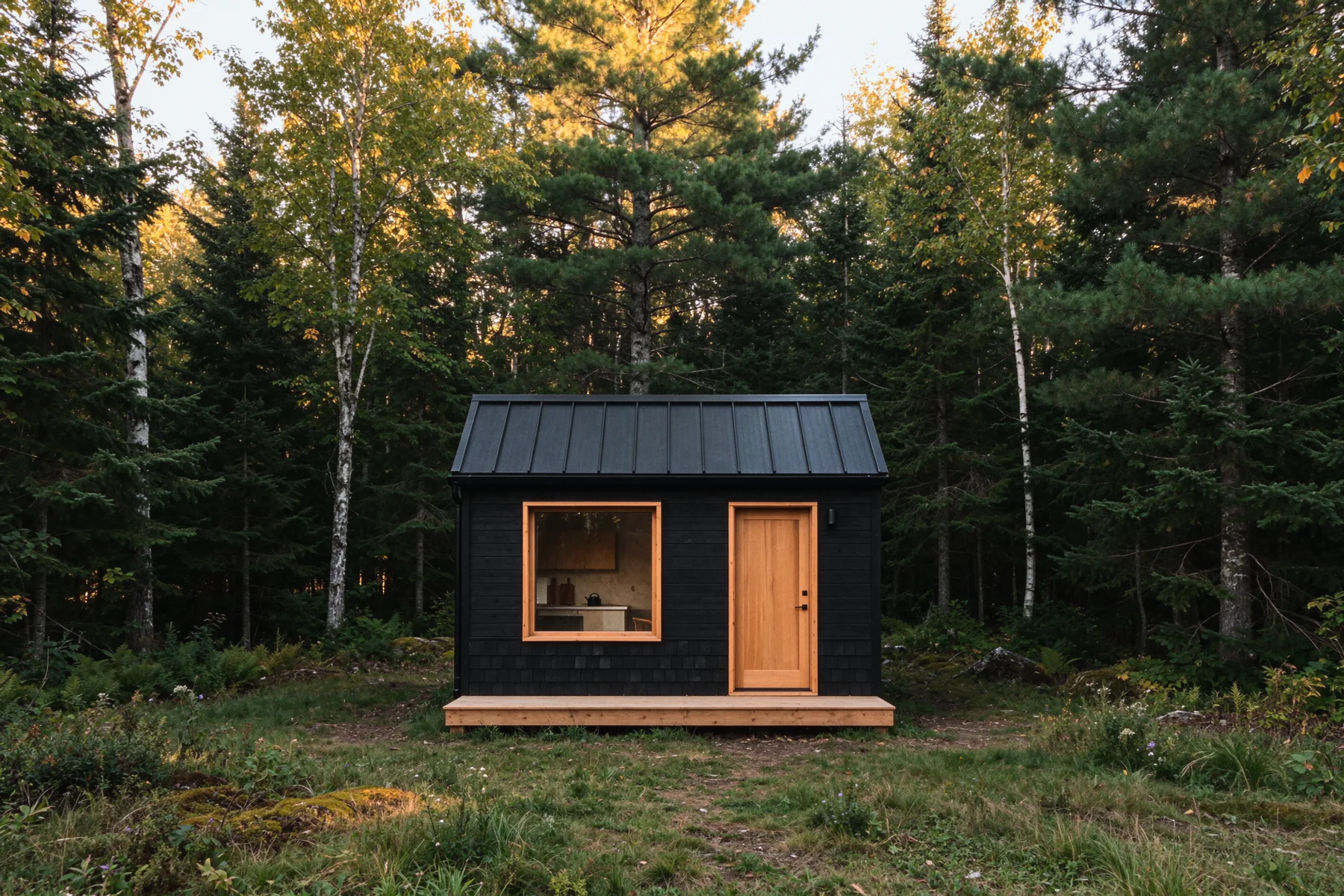
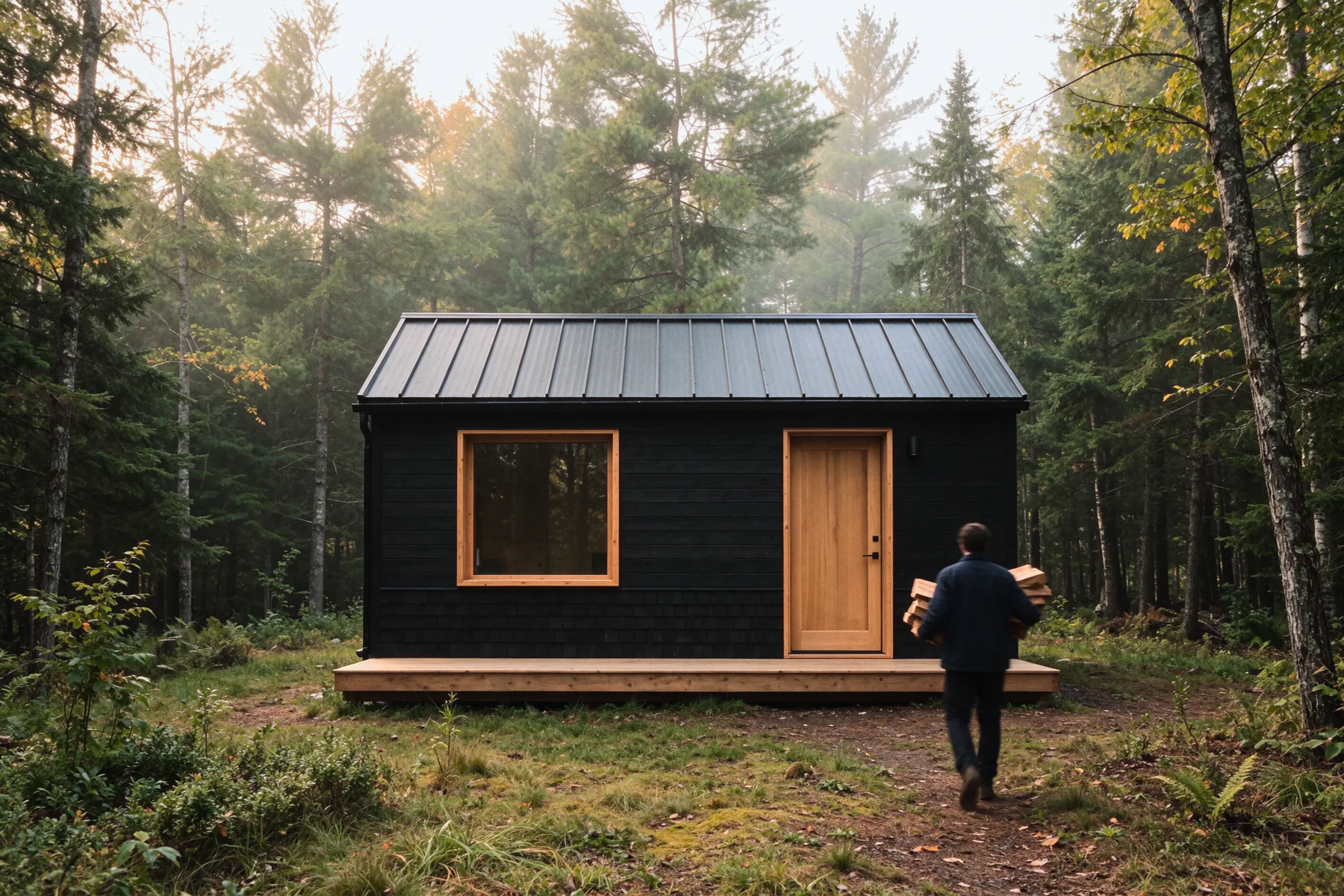
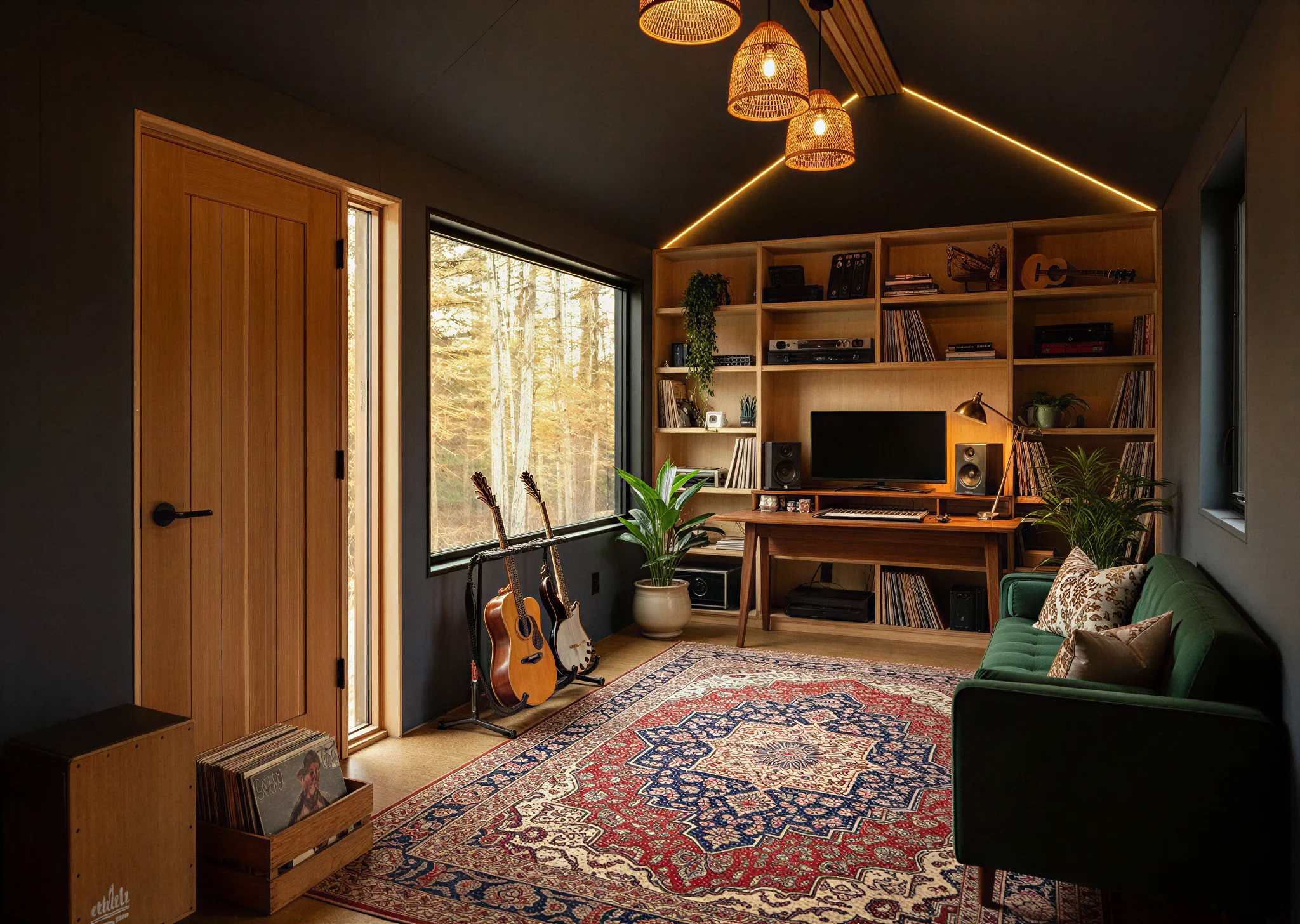
Small, scattered windows chop the outdoors into distracting strips and leave corners in shadow, forcing your eyes to constantly adjust between bright glare and dim walls. Our generous 5×5-foot picture window spans roughly 40% of the wall, acting as an uninterrupted frame around the landscape. It draws soft, even daylight deep into the room, eliminating dark corners and keeping your gaze anchored to the slow, calming rhythm of trees and changing skies.
Ageing
Vinyl and wood window frames expand and shrink at different rates than glass during extreme Canadian temperature swings, eventually straining the perimeter seals until they fail and fog up. Fiberglass moves at nearly the exact same rate as glass, keeping every seal airtight through decades of freeze-thaw cycles. The frames will never rot, warp, crack, or need scraping and repainting, preserving that same draft-free stillness year after year.
Environment
Windows are typically responsible for a huge share of a home’s heating and cooling demand. By drastically slowing heat transfer in both winter and summer, triple-pane fiberglass glazing cuts the energy required to keep the cabin comfortable year-round, lowering your carbon footprint without asking you to turn down the thermostat.